In the context of the City’s urban planning documents, transportation means everything from air and harbour facilities to sidewalks. As required by the Province, and through its own initiatives, the City of Thunder Bay has numerous policies that identify strategies and objectives for the City’s transportation needs. These documents use ambitious language like:
- complete, connected, compact & liveable
- multi-modal forms of transportation, cycling, walking, public transit
- accessible, all ages and abilities
- improved air quality, reduced greenhouse gas emissions, climate change adaptation
- traffic calming, improve conditions and safety for pedestrians and cyclists
- environmental sustainability, protecting and enhancing the natural environment
We could go on, but you get the point. Thunder Bay’s Official Plan, Smart Growth Action Plan, the Net-Zero Strategy, etc are full of this type of progressive, urban planning focused language. There’s nothing wrong with that. Cities around the world use the same language in their planning documents. However, the language in the City’s policies, strategies, and plans mean nothing if it isn’t translated into action.
In this article we’re going to focus on public transit and active transportation (walking and cycling). Did you know that in addition to the transportation goals and objectives in the documents referenced above, the City also has a Transportation Master Plan and a separate Active Transportation Plan? Like the other planning documents, the two transportation plans are full of strategies and objectives that sing the praises of quality public transit and active transportation for City residents.
However, on the ground at transit stops, on sidewalks (where they exist), along multi-use pathways, and in cycling lanes across the City, the shortcomings of the City’s public transit and active transportation infrastructure is clearly evident. The City is unable to provide a consistently reliable public transit system, the cycling infrastructure that does exist is not maintained year-round, sidewalks are lacking in many neighbourhoods, and connectivity between cycling infrastructure, sidewalks and existing multi-use trails is hit and miss.
Public Transit
The City’s public transit issues have seen frequent news coverage, not only recently, but over the last few years. There’s a dedicated Facebook page called Transit Woes. Reddit is rife with transit complaints. Transit riders discuss last minute cancellations, delays, and safety issues. Although most service changes are communicated to transit riders using different phone apps, sometimes buses just don’t show up. There’s no notice, no communication, the buses just don’t show up! Transit riders miss appointments, are late for work or school, and have to scramble to find alternate and costly modes of transportation.
At the March 3rd City Council meeting, Thunder Bay Transit recommended service adjustments which would see increased wait times for buses on routes throughout the city. Transit’s management team attributed the need for this decrease in service to staffing shortages and gave a litany of excuses as to why, and how it’s difficult to hire and train more drivers. Given Thunder Bay Transit has been using this excuse for several years, one would think they would have found a solution by now.
The Federation of Canadian Municipalities states:
“Public transit is the backbone of livable cities. Better transit means less congestion, faster commutes, more convenience, higher productivity and lower emissions. Simply put: public transit builds better lives.”
Where’s our public transit backbone? On a positive note, Council voted against the recommendation for reduced services. So now what? Neither Council nor Transit’s management offered any concrete plans for a solution. Fear not Dear Readers, Brad Loroff, manager of transit services, told CBC News in an email that transit is currently ” taking some time to determine next steps”.
To add insult to injury, Thunder Bay Transit is raising fares effective April 1st although their service has gotten worse. So, the status quo continues. Transit riders will be left standing in the cold, paying and waiting for a bus that may or may not arrive. The backbone of our City indeed.
Active Transportation – Cycling and Walking
In the City’s urban planning documents, you will find references to active transportation. Active transportation infrastructure makes it possible to move about a city without using a vehicle. Active transportation also improves public health, decreases environmental impacts, and improves equity and inclusivity as it provides affordable, accessible transportation options for all city residents, including those who do not own a car or cannot drive.
In cities across Canada, the US, and Europe, cycling is often a preferred method of travel whether going to work, shopping, or meeting friends. As Montreal and Oulu, Finland have shown, winter is not an excuse. Thousands of Montreal and Oulu residents, young and old, cycle year-round, regardless of snow and cold temps.
In order to allow residents of all ages and abilities to walk or cycle to their destination, whether that’s to work, school, a store, or the bus stop, you need to have the infrastructure in place, and it must be maintained year-round. That means prioritizing snow removal from sidewalks, multi-use trails, cycling infrastructure, and bus stops. That means ensuring sidewalks and multi-use trails actually go to destinations that people need and want.
Unfortunately, Thunder Bay’s infrastructure for cycling, sidewalks, and multi-use trails are often haphazard. Multi-use trails and cycling lanes often end unexpectedly, dumping cyclists onto a street, wondering where to go next. Sidewalks end and then continue on the opposite side of the street, forcing pedestrians to cross the road where no crosswalks exist. We’ve even seen crosswalks located in odd places, not positioned with cross streets or to/from access to businesses or services. These crosswalks require pedestrians to go out of their way, to walk further than required for what seems, no apparent reason.
Sidewalks, multi-use trails, and bus stops do not have the same priority as arterial and collector roadways or bus routes when it comes to snow removal. Cycling infrastructure is not maintained at all during the winter months. City residents who walk to a bus stop, school or work, often contend with snow covered, icy sidewalks and snow berms at intersections. The elderly, parents pushing a baby carriage, or folks using a motorized wheelchair or scooter, struggle along or are forced to stay home for fear of falling or getting stuck.
It’s often a tough slog for City residents who rely on public transit and walking to get to and from their destinations in winter or in inclement weather. For the majority of City residents, public transit, walking, or cycling are not viable or desirable transportation options.
The Environment
The City’s Smart Growth Plan states that the City will embed environmental considerations included in the Net Zero Strategy and Climate Adaptation Strategy into land development and housing infrastructure. By developing infill properties, the City states it will promote compact, connected communities, and create neighbourhoods that are more cycle friendly, more walkable, and more transit-friendly. This in turn would reduce greenhouse gas emissions from reduced vehicle usage, and protect mature tree stands and greenspaces which act as carbon sinks.
Not one of the proposed developments embeds the City’s environmental considerations. Each one requires the removal of mature tree stands. Each development will add hundreds of additional vehicles, significantly increasing gas emissions in the surrounding neighbourhood. Not one of them will promote compact, connected communities. Not one of them will create a neighbourhood that is more cycle friendly, more walkable, or more transit-friendly.
The Reality of 791 Arundel
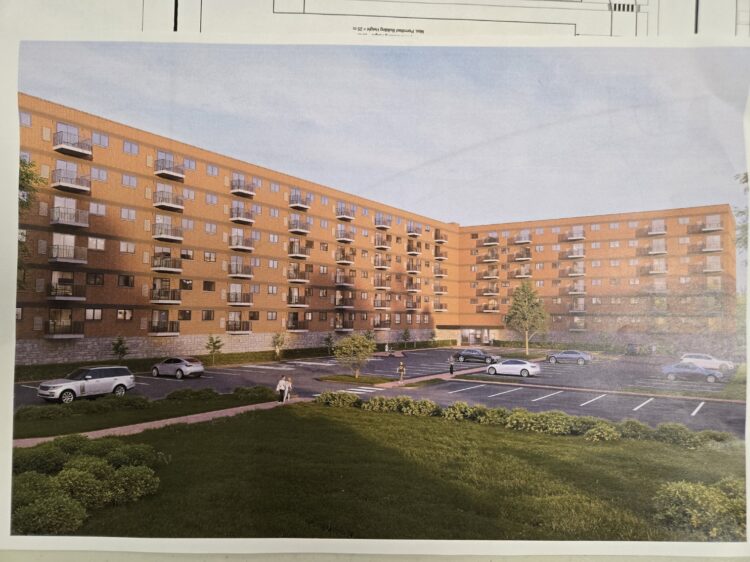
As we’ve said many times before, the City’s misguided insistence on developing the greenfield site at Arundel runs contrary to the objectives of the Official Plan, the Active Transportation Plan, the Net-Zero Strategy, and the Climate Adaptation Strategy, among others. Developing a 400 unit apartment complex on a greenfield site in a car-dependent neighbourhood is, quite frankly, poor urban planning.
The proposed development will see 400 – 800 people and at least several hundred vehicles move into a neighbourhood lacking services and amenities. These types of massive apartment complexes do not magically create compact, connected neighborhoods that are more cycle friendly, more walkable, and more transit-friendly.
There is only one bus servicing the neighbourhood, the Hudson #7, that currently runs every 30-45 minutes. This bus doesn’t run east along Arundel. It doesn’t go to Arundel & Hodder, where residents would find the only few shops and services available in Current River. The bus stop at Toledo and Hudson was completely destroyed by a speeding motorist in September 2025, and was never replaced. Transit riders are forced to stand at a makeshift bus stop, without protection from the elements.
There are no sidewalks along Hudson Ave. There are no sidewalks along Arundel, until you get to Black Bay Rd, 1.9km away from the proposed development. The few sidewalks that are on streets in the immediate neighbourhood are neither complete nor connected. The Active Living Corridor is not maintained year-round, nor are any of the painted bike lanes in the community, or for that matter, the entire City.
The result? The majority of the residents of this new complex will choose to drive or be forced to drive as other transportation options are undesirable, inconvenient, limited, or not available year-round.
As for the compact, connected neighborhood that is more cycle friendly, more walkable, and more transit-friendly? That’s just progressive urban planning language that in this case, means absolutely nothing.
What Can be Done?
It would be wonderful if the City had sufficient funds to support a first-class public transit system, to build and maintain sidewalks, multi-use trails, and year-round cycling infrastructure throughout the city, in every neighbourhood. It would be wonderful if the City could meet every objective in the Official Plan and all their other urban planning documents. However, that’s not realistic. What the City can do, and what we as residents must insist they do, is to at least make a start. Let’s action some of that progressive urban planning language wherever and however we can.
We can start by building larger multi-residential developments in our strategic cores, as envisioned in the City’s various planning documents. Not only will this build on the millions of taxpayer dollars already invested in revitalizing those areas, the cores already have the services, the shops, and the businesses that people need and want.
We can invest in our public transit system. We can build-out, neighbourhood by neighbourhood, the infrastructure that supports multi-modal forms of transportation such as walking and cycling. These steps will help create some of the much needed compact and connected neighbourhoods envisioned in the City’s urban planning documents.
We can support both organic and incremental growth in our city, focusing on human-scale growth versus rapid densification. Now that’s a growth plan everyone can get behind.